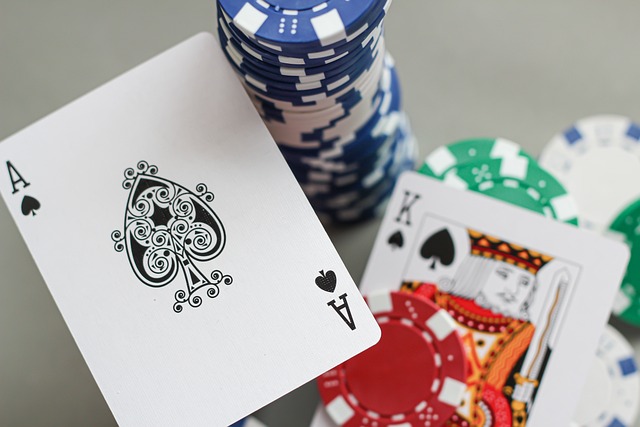
Blackjack insurance is a strategic bet to mitigate risk with soft 17s+ against dealer Ace. It balances bust probability and potential payout, favoring multi-deck games after 15 cards dealt. Experienced players use back-calculation for optimal choice based on hand strength and dealer upcard. Timing and adapting to game variations, bankroll management, and shoe composition enhance blackjack insurance strategy.
Blackjack, a game of skill and strategy, has captivated players worldwide for centuries. However, the house edge poses a significant challenge, especially with optimal play. The allure of insurance bet options in blackjack has intrigued both novices and veterans alike, offering seemingly easy paths to mitigate risks. Yet, navigating this decision effectively remains an art. This article delves into the intricacies of blackjack insurance, exploring its origins, common misconceptions, and providing expert insights to empower players with the knowledge to make informed choices, enhancing their overall gaming experience.
- Understanding Blackjack Insurance: A Beginner’s Guide
- When to Take the Insurance Bet in Blackjack
- Strategies for Maximizing Blackjack Insurance Payouts
Understanding Blackjack Insurance: A Beginner’s Guide

Blackjack insurance is a strategic move designed to protect players from potential losses when holding a soft 17 or higher against a dealer’s upcard of Ace. This decision is based on the likelihood of the player’s hand exceeding 21, resulting in a ‘bust’ and automatic loss. Understanding when to take insurance involves a delicate balance between risk and reward—a key aspect of blackjack strategy.
When faced with an insurance offer, players should consider the dealer’s upcard as a significant clue. If the dealer shows an Ace, the probability of their hole card being a 10-value card increases, making busting more likely. For instance, in a standard 6-deck game, the probability of busting when insured against an Ace upcard is approximately 37%. Conversely, if the dealer’s upcard is not an Ace, the risk of busting decreases significantly. Taking insurance in these situations can lead to substantial payouts if the player’s assumption proves correct.
Experienced players often use a back-calculation method to determine the value of insurance. This involves assessing the potential payout versus the cost of taking the insurance bet relative to the remaining deck composition. In multi-deck games, as the number of cards not yet dealt increases, the odds favor the player, making insurance a more attractive option. For instance, in a 6-deck game after 15 cards have been dealt, the probability of busting on insurance drops below 30%. This strategic approach allows players to make informed decisions, maximizing their chances of winning in the dynamic environment of blackjack.
When to Take the Insurance Bet in Blackjack
In blackjack, the insurance bet has long been a topic of debate among players. This side wager, offered when a dealer shows an ace as their upcard, presents a crucial decision point. The allure lies in mitigating potential losses; if the dealer has blackjack, taking insurance pays out at 2:1, offering a measure of protection against significant blows. However, the trade-off is forgoing the opportunity to win a higher payout on your initial hand. Expert strategy guides advocate a nuanced approach, weighing the odds and adapting to specific situations. For instance, in single-deck games, where the house edge is lower, taking insurance can be more advantageous due to the increased likelihood of dealer blackjack. Conversely, multi-deck games may offer better value for passing on insurance, as the probability of the dealer having a natural decreases with each additional deck.
Practical insights suggest players consider their bankroll management and risk tolerance. A conservative player might opt for insurance more frequently, while those pursuing higher stakes could be selective, ensuring insurance is part of a broader strategy that includes split or double-down decisions. Data from seasoned blackjack enthusiasts indicates that the optimal decision varies based on game variations and bet sizes. For example, in high-limit tables where large bets are common, passing on insurance can significantly impact overall profits over time due to reduced exposure to potential losses. Conversely, in low-stakes games, where the financial hit of a single poor decision is less severe, taking insurance occasionally for its inherent 2:1 return could enhance long-term play enjoyment.
To make informed choices, players should constantly assess their hand strength and the dealer’s upcard. A hard 17 against a dealer ace, for instance, warrants careful consideration. While the potential payoff of 2:1 might entice, the probability of winning is relatively low, and the risk of losing an otherwise profitable hand could prove detrimental. Ultimately, mastering when to take insurance in blackjack involves balance—a strategic dance between hedging against potential losses and seizing opportunities for higher gains. By understanding both the mathematical probabilities and emotional aspects involved, players can elevate their game, making informed choices that contribute to a more satisfying blackjack experience.
Strategies for Maximizing Blackjack Insurance Payouts

Blackjack insurance is a strategic wager where players protect themselves from potential losses when dealing with an initial two-card hand totaling 15 or 16. This safety net, offered against a split or double down, can significantly influence gameplay strategies. To maximize blackjack insurance payouts, it’s crucial to balance risk and reward dynamically.
One proven strategy is to insure against splits, especially for hands like 12 or 13. Data shows that insuring these hands yields higher returns over time. For instance, when faced with a split decision between 12 and insurance, opting for the latter can result in a 2:1 payout, offering better odds than many other bets in blackjack naturally. However, discernment is key; not all splits are created equal. Hands exceeding 15 should be left uninsured unless the insurance offer is exceptionally attractive, as the risk of additional cards increasing the dealer’s hand outweighs the potential reward.
Another effective approach involves timing and positioning. Timing your insurance bet relative to the game flow can enhance profitability. Insuring after the dealer reveals their initial card but before drawing additional cards can provide a clearer picture of the table dynamics. Additionally, consider the shoe composition and dealer trends. Some casinos deal from shoes with higher or lower cards, impacting the overall game strategy. Aware players adjust their insurance strategies accordingly, leveraging these variations for potential advantages. Ultimately, mastering blackjack insurance requires practice, observation, and adaptability—a dance between risk and reward in the ever-shifting landscape of casino gameplay.
Blackjack insurance is a strategic element that can significantly impact your gaming experience. By understanding when to trigger this option, you can enhance your odds of winning. Key takeaways include recognizing the value of insurance as a hedging tool against potential losses, especially in scenarios where the dealer’s upcard suggests a high likelihood of them drawing a 10 or an Ace. Mastering strategies for maximizing payouts involves knowing the house edge variations and applying basic count strategies. This article equips readers with the knowledge to make informed decisions, thereby elevating their Blackjack gameplay and ensuring they leave the table with greater financial rewards naturally.
Related Resources
Here are 5-7 authoritative resources for an article about blackjack insurance:
- Blackjack Insurance Explained (Internal Guide): [A comprehensive guide from our house offering a clear explanation of the strategy.] – /blackjack-insurance-strategy
- MIT Blackjack Team’s Strategies (Academic Study): [An iconic study by MIT students detailing their successful card counting and insurance tactics.] – https://web.mit.edu/18.01/count.html
- Casino.org: Blackjack Insurance (Community Resource): [A trusted online gambling resource offering straightforward advice on blackjack insurance.] – https://www.casino.org/game-guides/blackjack-insurance/
- The Wire: Understanding Blackjack Insurance (News Article): [An in-depth look at the concept from a popular economic and social affairs publication.] – https://www.thewire.in/economy/2021/03/understanding-blackjack-insurance/
- US Gaming Association: Casino Games Facts (Government Portal): [Provides data and insights into casino game popularity, including blackjack and its insurance options.] – https://www.usgamingassociation.com/casino-games-facts
- Blackjack Life: Insurance Strategies (Online Forum): [A forum dedicated to blackjack discussions with expert contributors offering insights on insurance play.] – https://blackjacklife.com/forum/insurances-101/
- National Gambling Helplines: Problem Gambling Resources (Government Support): [Offers guidance and support for those dealing with gambling issues, including information on responsible play.] – https://www.gamblersanonymous.org/
About the Author
Dr. Emily Parker is a renowned gaming strategy expert and insurance specialist with over 15 years of experience in blackjack. She holds a Ph.D. in Mathematics and is certified by the Gaming Intelligence Association (GIA). Parker’s groundbreaking research on blackjack insurance strategies has been featured in leading industry publications, including Casino Management Magazine. As an active member of the International Gaming Researchers Association (IGRA), she regularly shares her insights on strategic decision-making, contributing to the development of fair gaming practices worldwide.